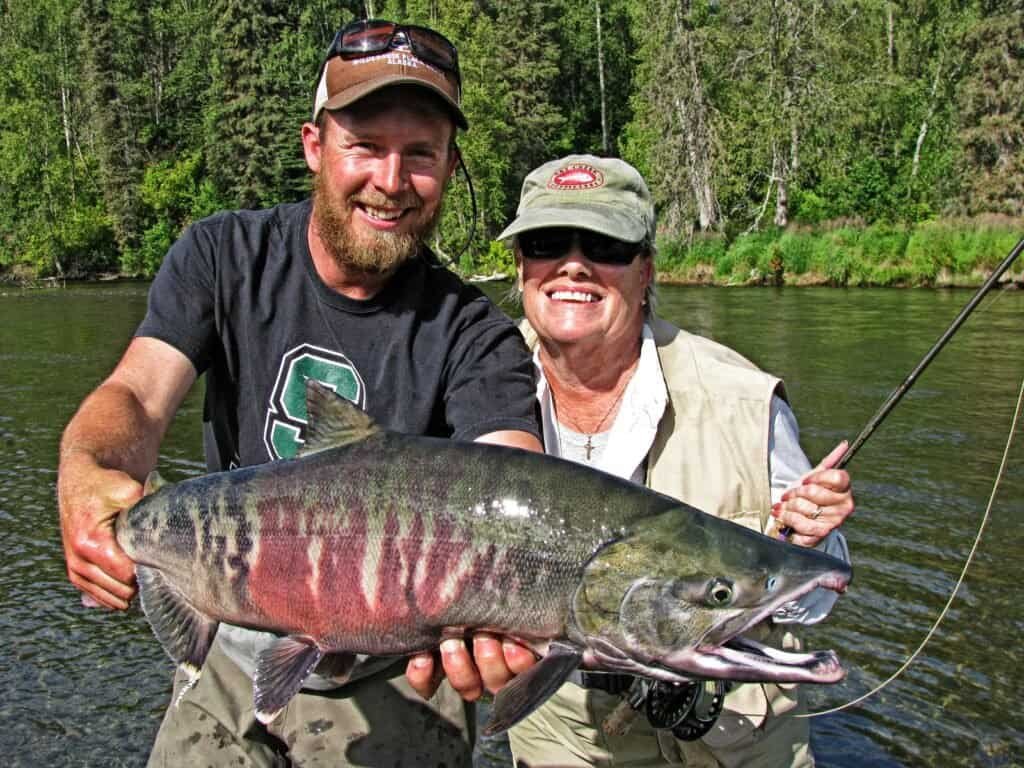
Alaska Chum "Keta" Salmon Fishing

Alaska chum salmon fishing is gaining in popularity! This beautiful salmon species is an extremely aggressive, strong fish. available during late July and August.

  1. Home
  2. »
  3. Fishing
  4. »
  5. Fish Species
  6. »
  7. Chum Salmon

Chum Salmon Biology and Ecological Importance

Chum salmon (Oncorhynchus keta) are one of Alaska’s most resilient and widely distributed Pacific salmon species, playing a critical role in the health of northern river ecosystems. Born in the clean gravel of remote freshwater streams, young chum salmon migrate to the ocean shortly after emerging, where they spend several years feeding and growing in the nutrient-rich waters of the North Pacific. When mature, they return with remarkable accuracy to the rivers where they were born, often weighing between 8 and 15 pounds and sometimes much larger. During spawning, chum salmon deliver an important pulse of marine nutrients back into freshwater environments, supporting insects, birds, bears, and countless other species that depend on healthy salmon runs.

Chum Salmon Fishing at Wilderness Place Lodge

At Wilderness Place Lodge on Alaska’s wild Lake Creek river system, anglers enjoy an exhilarating opportunity to target chum salmon in a pristine wilderness setting. During the height of the run, these powerful fish aggressively strike both spin and fly presentations, making them an ideal species for anglers of all experience levels. Spinners, spoons, and jigs are highly effective for spin fishermen, while fly anglers often find success with bright streamers or egg-imitating patterns drifted through clear runs and pools. Known for their powerful runs and stubborn fights, chum salmon provide nonstop action and unforgettable fishing moments, making the remote waters surrounding Wilderness Place Lodge one of Alaska’s most exciting destinations for salmon fishing adventure.

An amazing Alaska chum salmon caught by guided fishing and a fly-in lodge near Anchorage.

Chum Salmon Spin Fishing

Effective chum salmon spin fishing in Alaska often involves casting lightweight spinners into shallow pools, retrieving spoons through mid-river currents, or swimming small jigs along slack water seams where the main current meets eddies or current breaks. Many backwater sloughs and oxbows are shallow and clear, making spinners and light jigs ideal for sight-casting to visible fish.

To avoid spooking salmon, cast beyond the school and retrieve through the fish. Chum salmon holding in deeper pockets of pools or sloughs are often the most aggressive, and a faster retrieve can trigger explosive strikes.

Chum Salmon Fly Fishing

Fly fishing for chum salmon delivers exciting spot-and-stalk action in shallow, clear pools. Anglers target these aggressive fish with subsurface flies or surface patterns like gurglers and wogs. Because chum salmon are highly territorial, they often chase large, bright flies retrieved with quick, erratic movement. When they strike, they hit hard and fight powerfully, making them a favorite among fly anglers.

At Wilderness Place Lodge, chum salmon fishing peaks in late July and August and pairs perfectly with strong runs of silver and pink salmon, which are often found in the same waters. Chums are typically the largest salmon caught on the fly during August, adding an exciting challenge to Alaska fly fishing adventures. For more techniques and tips, see our Alaska fly fishing guide.

Alaska Chum Salmon Fly Patterns

Visit our signature Alaska fly patterns page for more recommended coho flies. Chum salmon are highly aggressive and often hold in slack water along the main channel, including backwater sloughs and eddies. Swing, strip, or skate a fly through schools of chums—presenting the fly across or just past their nose often triggers explosive strikes. Heavy weighting isn’t necessary; bead chain eyes or a few wraps of lead wire are usually enough to help the fly sink quickly after the cast. Chums will also strike topwater flies, so try a gurgler presentation much like with silver salmon.  You’ll typically find chums in the same areas as silvers. Many anglers have great success with green patterns, but experimenting with different flies can help you discover what works best.