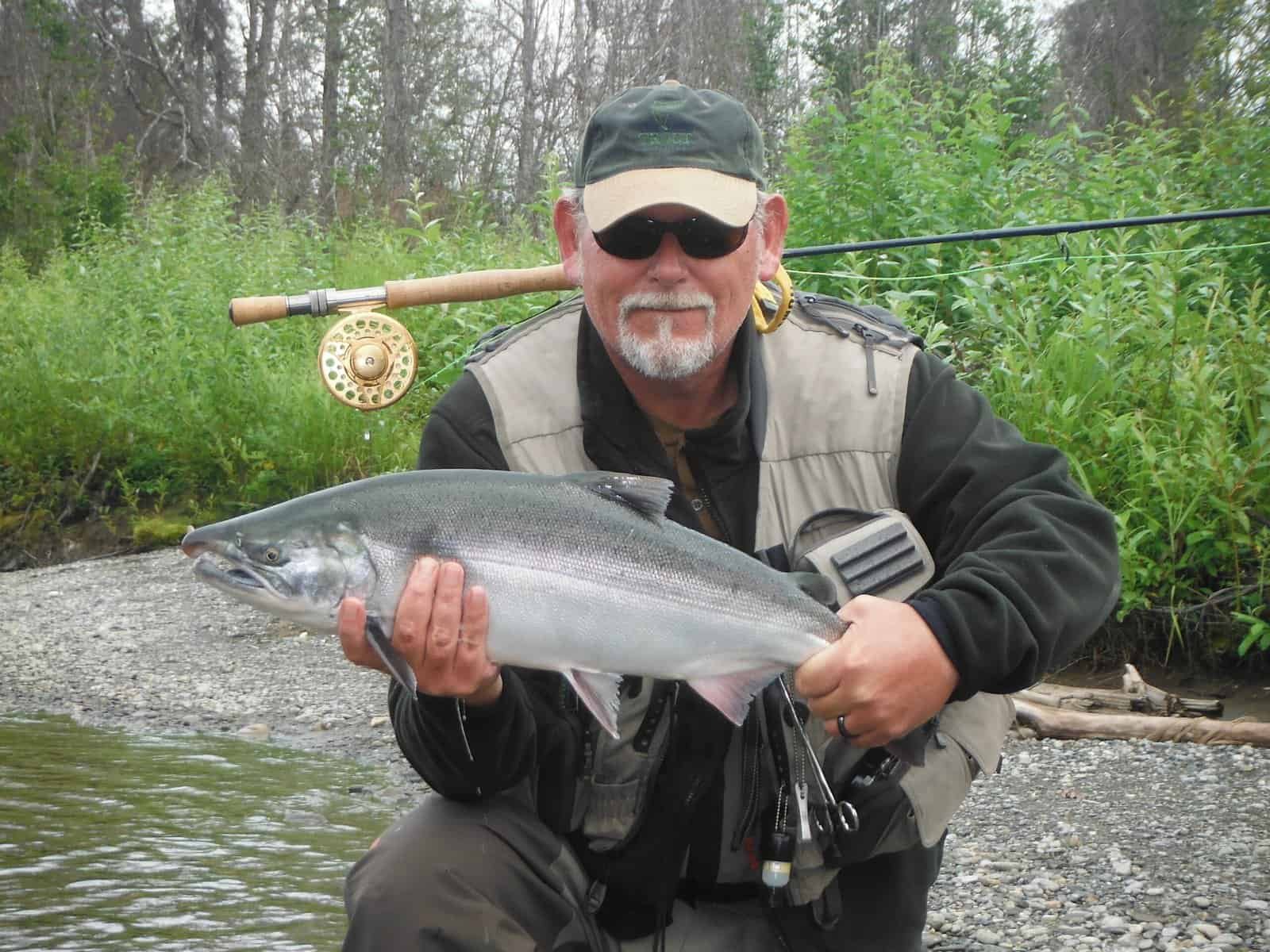
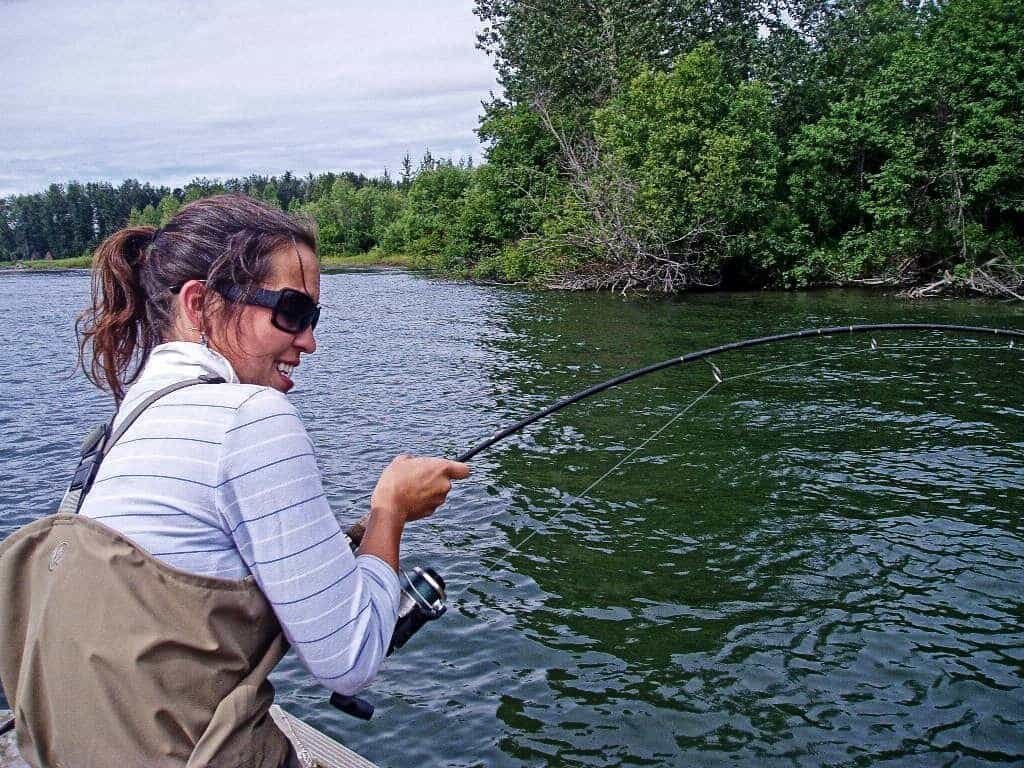
Two techniques, one unforgettable river — where spinning lures and drifting flies meet Alaska's wildest fish
Alaska’s remote freshwater rivers offer two distinctly rewarding approaches to chasing wild rainbow trout, Arctic grayling, and salmon in their pristine, roadless corridors. The spin fisherman works generally with a medium-action rod and monofilament or braided line, casting weighted lures — spinners, spoons, or soft-plastic jigs — that mimic the flash and movement of baitfish or salmon eggs drifting in the current. The gear’s versatility allows casts across wide, braid channels and deep pools where fish hold in cold, fast-moving water, making it an accessible and highly effective technique for covering large stretches of river quickly. The fly fishing enthusiast, by contrast, relies on the weight of a specialized fly line to deliver nearly weightless hand-tied flies — dry flies dancing on the surface, nymphs tumbling through riffles, or streamers swinging across deep runs — in a performance that demands patience, rhythm, and a deep reading of the water. In a remote Alaska river, far from roads and crowds, both methods are elevated to their purest form: just the angler, the rod, and raw, unspoiled waters. Together, they represent two philosophies of the same pursuit — one rooted in mechanical efficiency, the other in artistry and imitation.

No two groups are alike, and cookie-cutter trips aren't our style. We take the time to understand what you're looking for and tailor every detail of your stay to match.