Alaska sockeye salmon fishing is a true adventure of sight-casting and knuckle-busting fights. Sockeye "Red Salmon" enter our river by the tens of thousands during mid-July and provide an ideal quarry for fly fishing and spin fishing enthusiasts of all abilities.
Alaska sockeye salmon, commonly called “red salmon,” are one of the most fascinating species in the Pacific salmon family. These fish begin life in cold, clean freshwater streams and lakes where they hatch from eggs and spend one to several years growing before migrating to the open ocean. After several years feeding in the North Pacific, adult sockeye return with incredible precision to the very river systems where they were born. During this spawning migration their bodies transform into the vibrant red color that gives them their nickname. Sockeye salmon are extremely important to Alaska’s ecosystems because they transport ocean-derived nutrients back into inland watersheds, feeding wildlife, enriching river habitats, and supporting healthy freshwater food chains throughout the region.
At Wilderness Place Lodge, anglers experience the excitement of targeting sockeye salmon in the clear, wild waters of a remote Alaska river system. As summer runs build, thousands of sockeye move upstream through the lodge’s pristine freestone river, creating dynamic fishing opportunities in riffles, runs, and deeper holding pools. Guests can pursue these powerful salmon using both spin fishing tackle and fly fishing gear, with techniques designed to present flies or lures naturally in the current where traveling fish pause on their upstream journey. The combination of strong salmon runs, uncrowded wilderness water, and expert guidance makes sockeye fishing at Wilderness Place Lodge a thrilling and authentic Alaska fishing adventure.
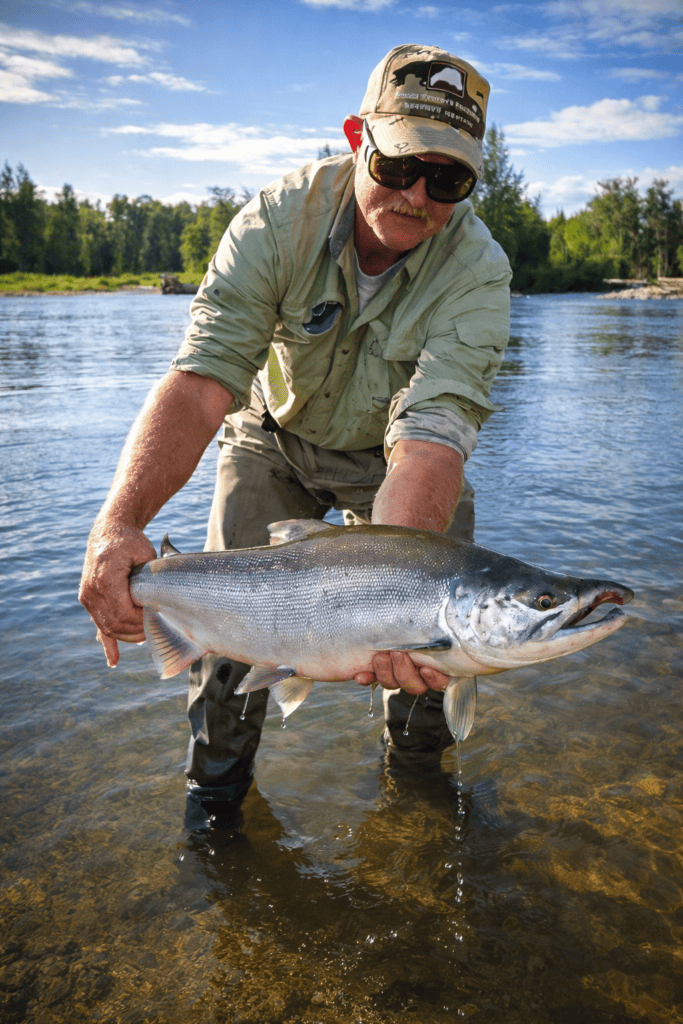
Sockeye salmon can be effectively targeted using several proven spin-fishing techniques. One of the most productive methods is casting Blue Fox Vibrax spinners or small jigs and retrieving them across the current while drifting slowly downstream. This cross-current presentation allows the lure to swing naturally through the water column, creating flash and vibration that trigger aggressive strikes from migrating sockeye salmon.
Another effective approach uses light-action spinning rods with a fly setup. In this technique, a fly is tied to an 18-inch leader attached to the mainline with a barrel swivel and a light egg sinker. The rig functions similarly to a jig but produces a longer, natural swimming motion that sockeye often find irresistible. By adjusting the weight and leader length, anglers can easily control presentation depth and adapt to changing river currents—making this a versatile and highly productive method for targeting sockeye salmon in Alaska’s clear, fast-moving waters.
Fly fishing sockeye salmon is truly a fast-paced, exciting sport of pursuit, sight-casting, acrobatic fights and drag-pulling fun. Sockeye salmon, due to their shear numbers allow for a high success rate for fly fishermen and women of all abilities. Wade fishing from gravel bars and drifting flies to long lines of chrome bright sockeye running upstream is an exhilarating experience. Sockeye, pound-for-pound may be the best fighting salmon in Alaska.
For more proven patterns, visit our Alaska fly patterns page featuring recommended sockeye salmon flies used by anglers at Wilderness Place Lodge. Sockeye salmon fly patterns are typically lightly weighted to help the fly drift naturally beneath the surface. Weight is commonly added with wrapped lead wire on the hook shank or through cone heads, bead eyes, or dumbbell eyes. The goal is not excessive weight, but just enough to allow the fly to drift 8–24 inches below the surface, where sockeye salmon are most active. Carrying a selection of fly sizes and weights helps anglers adjust presentation to changing water conditions.
Sockeye salmon are often targeted by swinging flies along the inside edge of faster current, especially in shallow runs where large schools of fish gather during their migration. At Wilderness Place Lodge, anglers typically fish with floating fly lines and short 4–5 foot leaders, allowing for precise presentation in moving water. Bright attractor colors such as orange, chartreuse, and pink consistently produce the best results when fly fishing for Alaska sockeye salmon.